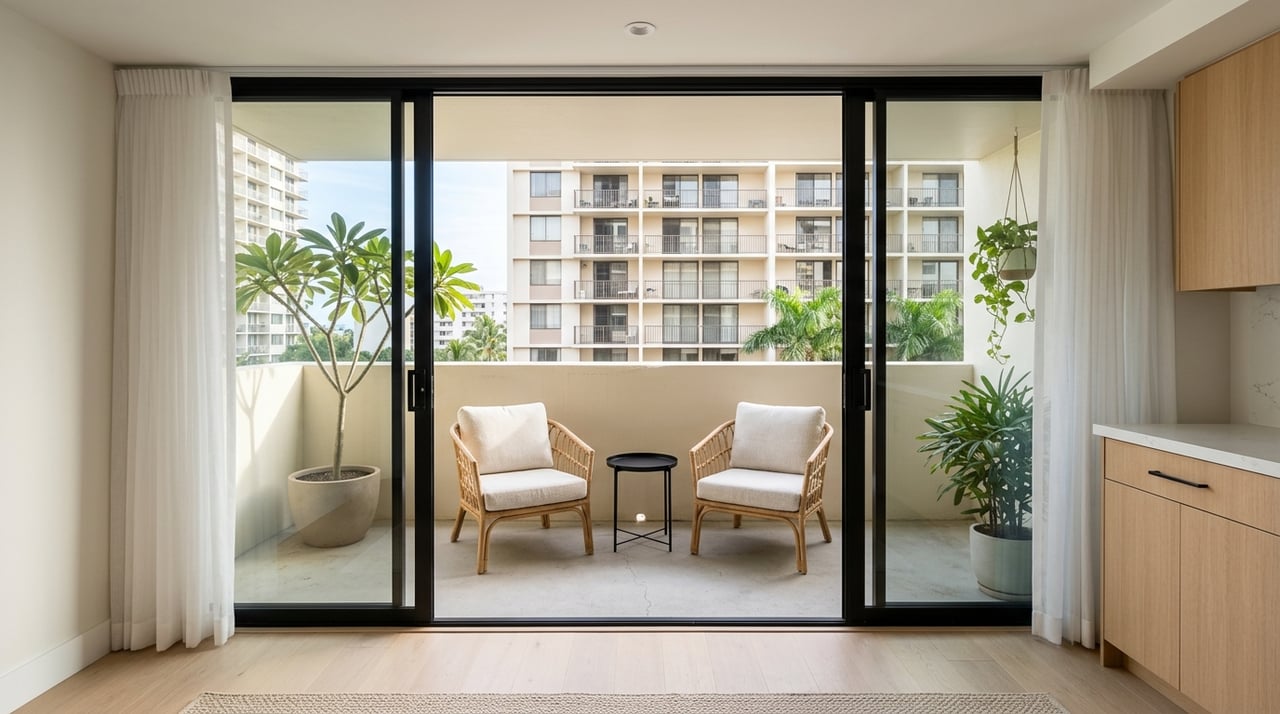
Living In Waikiki High Rises Day To Day
May 28, 2026
May 28, 2026
If you picture Waikīkī as a place only for vacations, day-to-day life there may surprise you. It is also a full-time home for thousands of residents, which means your routine blends beach access, errands, transit, condo living, and steady visitor activity in one compact district. If you are wondering what it really feels like to live in a Waikīkī high rise, this guide will help you understand the rhythm, the perks, and the tradeoffs. Let’s dive in.
Waikīkī functions as both a neighborhood and a resort district. Honolulu describes it as a permanent home for thousands of residents and a temporary home for hundreds of thousands of visitors each year, while the Waikīkī Business Improvement District describes it as an active resort and residential community.
That mix shapes daily life in a very real way. You are not living in a quiet subdivision tucked away from activity. You are living in a dense, mixed-use coastal area where homes, hotels, shops, dining, entertainment, and services all exist close together.
For many residents, that is exactly the appeal. You can step outside your building and be close to everyday conveniences, beach access, and public spaces without needing to plan your whole day around driving.
One of the biggest lifestyle shifts in Waikīkī is how often you may walk. The City and County of Honolulu's Ala Wai Boulevard project focuses on making the area safer and more connected for people walking, using wheelchairs, biking, taking transit, and driving.
That tells you something important about how the neighborhood works. Waikīkī is designed around movement by foot as much as movement by car, especially along major corridors like Ala Wai Boulevard, Kalākaua Avenue, Kūhiō Avenue, and the beach area.
If you enjoy being able to walk to coffee, dining, small errands, or the shoreline, high-rise living here can feel very convenient. Instead of thinking in terms of long drives between places, you may start thinking in terms of blocks.
TheBus provides dense service in Waikīkī, with routes including 2 and 2L, 8, 13, 14, 20, 42, and 200 serving the area. That level of service supports a car-light lifestyle for many residents.
In practical terms, you may not need to drive every day to manage your routine. For some people, that is a major quality-of-life benefit, especially if you want to reduce parking stress or keep transportation simple.
That said, car-light does not always mean car-free. Your work schedule, where you need to go outside Waikīkī, and your building's parking setup can all make a big difference.
If you are considering a Waikīkī high rise, parking should be one of your first questions. Research from state and city sources shows that parking can be limited in shoreline areas, and street parking is part of the mix in some locations.
That means parking is not just a small detail. It can affect how easy your daily routine feels, especially if you commute regularly, host visitors, or rely on a vehicle for work or family needs.
Before you buy, make sure you understand:
Two towers in the same general area can offer very different day-to-day experiences. A building with secure, usable parking may feel much more practical than one where parking becomes a daily hassle.
Living in Waikīkī means the ocean is not just something you visit once in a while. It can become part of your normal week, whether that means a morning walk, time on the sand, or simply ending the day near the shoreline.
The city highlights beach parks, lifeguard coverage, and beach safety signage across Oʻahu. In Waikīkī specifically, the beach end of the district includes year-round lifeguards as well as restrooms, showers, emergency and pay phones, and a snack bar, according to the Department of Land and Natural Resources.
That level of access is a real lifestyle advantage. It gives you easy entry to outdoor recreation and makes spontaneous beach time much more realistic than it would be in many other neighborhoods.
Easy beach access does not remove the need for caution. Honolulu advises the public to use lifeguarded beaches and pay attention to warnings about hazardous conditions.
That is a useful reminder for daily life in Waikīkī. Even if the shoreline feels familiar, the ocean still deserves respect each time you head out.
For full-time residents, this becomes part of the routine mindset. Beach living is one of Waikīkī's biggest benefits, but safe habits are part of enjoying it well.
A lot of people associate Waikīkī only with sand and surf, but daily life can include more than that. Honolulu points to nearby recreation options such as the Honolulu Zoo, the Tom Moffatt Waikīkī Shell, and botanical gardens.
That broader mix matters when you are thinking about a neighborhood as a place to live, not just a place to stay. It means your options for leisure and downtime are layered, even within a compact area.
For some buyers, that adds to Waikīkī's appeal as a primary home base. You get an active setting with multiple ways to spend your time close to home.
One of the biggest adjustments in Waikīkī high-rise living is noise. Honolulu has a Waikīkī-specific amplified-sound ordinance that restricts amplified sound on public sidewalks near homes and hotels between 7 p.m. and 6 a.m., which shows the city recognizes the need to preserve some tranquility in a densely inhabited and bustling district.
That ordinance helps, but it does not make Waikīkī silent. You should still expect an urban baseline of sound and activity, especially compared with more suburban parts of Oʻahu.
For some residents, that energy feels lively and convenient. For others, it may take time to adjust. The key is being honest with yourself about whether you want a vibrant environment or a quieter one.
Not all Waikīkī high rises feel the same. Your daily quality of life can vary based on the building's layout, management, parking, rules, and overall upkeep.
That is especially important in Honolulu because high-rise residential buildings must undergo fire-safety evaluations, and the Honolulu Fire Department notes that the city fire code effective January 3, 2025 includes sprinkler requirements for high-rise buildings. Those are not details to gloss over during your search.
When you compare buildings, look closely at practical issues such as:
A unit with a great view may still feel less comfortable if the building operations do not fit your needs. Good building-level research can make a big difference in how happy you are after move-in.
Waikīkī also benefits from visible district-level support. The Waikīkī Business Improvement District says it supplements city services through programs focused on cleanliness, outreach, and safety presence, including 24/7 safety coverage at Kūhiō Beach Park with city funding.
That does not mean every block feels the same at every hour. Still, it does show that Waikīkī is actively managed as a busy district where resident life, public space, and visitor activity overlap every day.
For residents, that support can be part of what makes dense urban living more workable. It reflects the reality that Waikīkī is both highly active and closely watched.
Living near the beach also means living with ongoing shoreline management. The state has reported active planning and environmental review related to the Waikīkī Beach Improvement and Maintenance Program, with issues such as erosion, climate change, beach stabilization, sand replenishment, and maintenance of shoreline structures all part of the conversation.
The City and County of Honolulu has also had to keep public access open during repairs in eroded shoreline areas near the Waikīkī Aquarium, while advising caution around work zones. In simple terms, beach access is a major benefit, but it is not always static.
That is helpful to understand before you buy. The shoreline is one of Waikīkī's biggest assets, but periodic work and occasional access changes are part of the lived experience.
Waikīkī often works well for people who value convenience, walkability, and an active coastal setting. If you like the idea of having dining, services, transit, and the beach close together, the neighborhood can function well as a full-time home base.
It may be especially appealing if you do not want to rely on driving for every small task. The area's density and transit access support a lifestyle where walking and bus use are a normal part of the week.
At the same time, it helps to be comfortable with tradeoffs. Noise, parking friction, and building-specific differences are all part of the picture.
If you are comparing Waikīkī condos, focus on how the building fits your real routine, not just how the listing looks online. A pretty unit is only one piece of the puzzle.
Ask practical questions such as:
Those answers can help you narrow in on the right tower and avoid surprises later. In Waikīkī, lifestyle fit matters just as much as square footage.
If you are thinking about buying a condo in Waikīkī or another Oʻahu neighborhood, Jasmin Cadiz can help you sort through the details with clear guidance, local insight, and a practical approach that keeps your goals front and center.
Stay up to date on the latest real estate trends.
I am committed to guiding you every step of the way—whether you're buying a home, selling a property, or securing a mortgage. Whatever your needs, I've got you covered.
Jasmin Cadiz
91-1010 Shangrila St Ste 307 Kapolei HI 96707