What Townhome Living In Waipahu Really Offers
June 25, 2026
June 25, 2026
Wondering if a townhome in Waipahu gives you the right balance of space, cost, and convenience? You are not alone. Many Oahu buyers want more room than a condo but do not want all the upkeep that can come with a detached house. If that sounds like you, understanding what townhome living in Waipahu really offers can help you narrow your search with more confidence. Let’s dive in.
Waipahu sits in a practical location for many Oahu buyers. The Waipahu Community Association describes it as about 14 miles west of Honolulu, with older and newer sections shaped by long-term growth and transit-focused planning. That central West Oahu position, along with access to shopping and freeway routes, helps explain why townhomes are such a common option here.
Transit is part of that appeal too. Skyline serves the Waipahu Transit Center at Pouhala, with nearby access at Hōʻaeʻae/West Loch and bus connections that include routes 40, 42, 44, 433, 444, and W1. For buyers thinking about daily routine, commute options, or household flexibility, that can be a meaningful advantage.
Waipahu also remains a mid-market option for many buyers. Recent public portal data in the research report places the median sale price at about $660,000 over the last three months, with the market described as somewhat competitive. That makes townhomes worth a close look if you want a middle-ground property type in a busy Oahu market.
One of the biggest things to know is that “Waipahu townhome” can mean several different products. Many properties that show up in Waipahu searches are actually in nearby communities like Waikele and Waipio Gentry. That matters because layout, parking, fees, and amenities can vary a lot from one project to another.
Waikele, for example, is a master-planned community with more than 2,937 homes across multiple neighborhoods. The Villages at Waipio identifies itself as a two-story townhome condominium property in Waipio-Gentry with access to shopping, parks, bus routes, restaurants, and industrial businesses. In other words, location labels in your search may feel broad, but the actual community experience can be very specific.
That is why it helps to look beyond the map pin. Two townhomes with similar asking prices may offer very different parking setups, monthly dues, and outdoor space. The details often matter just as much as the zip code.
Waipahu townhomes usually range from compact starter-style homes to larger family-size layouts. Recent examples in the research report include two-bedroom, two-bath homes around 754 to 770 square feet, as well as a three-bedroom, three-bath townhome with 1,387 square feet. That spread gives buyers more flexibility than many people expect.
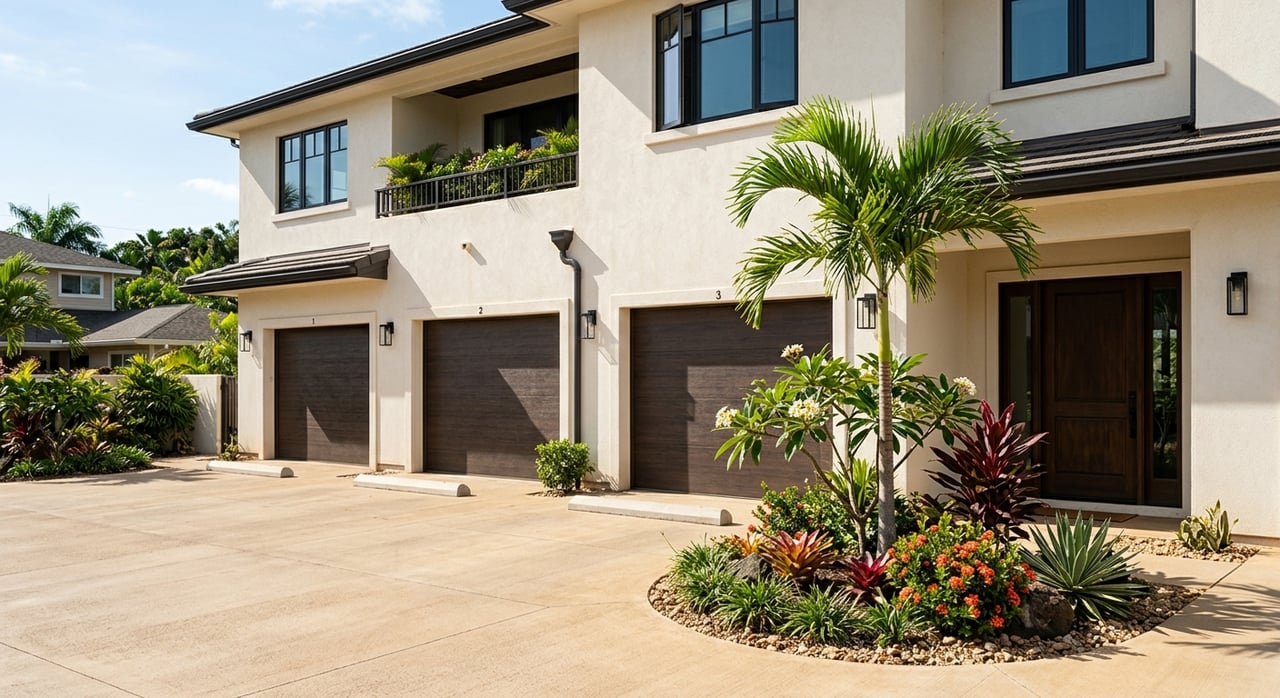
Some homes feel more condo-like, while others feel much closer to a small house. You may find ground-floor units with fenced patios, two-story floor plans, or layouts with attached garages and driveway parking. In newer Koa Ridge examples, plans around 896 to 1,250 square feet often include enclosed garages, private yards, split-system AC, solar water heaters, and EV-ready outlets.
If you are comparing options for a household with changing needs, that variety can be a real plus. A smaller two-bedroom may work well for a first purchase, while a larger three-bedroom layout may better fit a move-up buyer looking for more breathing room.
In Waipahu townhome living, parking is often one of the most important features to check. It is not enough to assume every townhome comes with the same setup. Some have two assigned stalls, some offer one covered and one open stall, and others include a garage with extra space in the driveway.
There are also smaller or older communities where you may only get one assigned stall. For households with multiple vehicles, frequent visitors, or changing work schedules, that can affect day-to-day convenience more than square footage alone.
Guest parking rules matter too. The research report notes that the Villages at Waipio uses overnight visitor parking passes, does not allow residents to use visitor stalls, and enforces parking rules with towing. Before you fall in love with a home, make sure the parking situation works for your real life.
One reason townhome living appeals to many buyers is the mix of private living space and shared community features. In Waipahu-area projects, amenities can feel more like a small residential neighborhood than a basic apartment building. Depending on the community, you may see pools, clubhouses, BBQ areas, walking paths, car wash areas, playgrounds, fenced patios or yards, and security features like patrols or cameras.
The Villages at Waipio, for example, lists a clubhouse, car wash area, upgraded playground, pool and lounging area, plus 24-hour surveillance with nightly security patrols. Other condo-style properties in Waipahu may include secured parking, secured building access, on-site management, guest parking, barbecue grills, recreation areas, and private garden space.
These features can improve daily living, but they also affect monthly cost. That is why amenities should always be weighed against your budget and how much you will actually use them.
A lower purchase price does not always mean a lower overall housing cost. In Waipahu townhome communities, monthly dues can vary widely depending on the property, size, and amenity package. The research report cites examples ranging from the mid-$300s to more than $1,100 per month, with one sold Mahi Ko at Waikele example showing a $432 maintenance fee plus a $51 association fee.
That is a big range, and it is one of the most important reasons to compare homes carefully. A townhome with a higher monthly fee may still make sense if it offers more included services or better long-term maintenance planning. On the other hand, a lower-fee property may come with fewer amenities or different future cost considerations.
In Hawaii, this topic deserves extra attention. The Department of Commerce and Consumer Affairs says condominium boards can increase maintenance fees with at least 30 days written notice, and reserve planning is required so associations collect money for future repairs instead of relying on surprise special assessments. For buyers, that means the monthly fee is not just a line item. It is part of how the property is managed over time.
This is one of the easiest details to miss. In Waipahu, some townhomes are fee simple, while others are condominiums or planned-community properties with association rules that govern common areas, repairs, and assessments. The word “townhome” describes a style of living, but not always the legal structure.
According to Hawaii DCCA, if the governing documents reference Hawaii Revised Statutes chapters 514A or 514B, the property is a condominium. That is why you should not rely on the listing title alone. You want to know exactly what you own, what the association maintains, and what financial obligations come with the property.
This can affect more than paperwork. It can shape your monthly costs, repair responsibilities, and even day-to-day rules about the community.
If you are deciding between a condo and a townhome in Waipahu, the biggest difference is usually space and privacy. The condo example in the research report is a one-bedroom, one-bath, 444-square-foot high-rise unit with one assigned stall and a $467 monthly HOA that includes management, common areas, sewer, and water. That can work well if your priority is compact living and lower maintenance.
Townhomes often offer a more house-like feel. Many include two-story living, two or more parking stalls, and patios or yards that give you more usable outdoor space. For buyers who feel boxed in by smaller condos, that extra room can make a big difference in comfort.
At the same time, condos may still win on simplicity for some households. The right choice depends on how much space you want, how you use outdoor areas, and what level of maintenance feels manageable for you.
Compared with detached homes, townhomes often reduce the amount of exterior upkeep and yard work you handle on your own. That can appeal to buyers who want more space but do not want full responsibility for a larger lot. It can also make day-to-day living feel more manageable for busy households.
Detached homes usually offer more land, fewer shared walls, and more independence. The single-family examples in the research report highlight things like fenced yards, lanais, garages, private outdoor retreat space, and added storage. Those features can be appealing, but they also tend to come with more owner responsibility.
For many buyers, Waipahu townhomes sit in the middle. You often get more room and better parking than a condo, while avoiding some of the maintenance burden that comes with a detached house. That middle ground is a big reason townhomes stay on the shortlist for first-time buyers and budget-conscious households.
Before you schedule a showing, it helps to know the questions that matter most. A good tour is not just about finishes and photos. It is about understanding how the property will function for your everyday life.
Ask about these details before or during your visit:
Those answers can help you compare a townhome against a condo or single-family alternative in a much more practical way.
What townhome living in Waipahu really offers is balance. You may get more space than a condo, less maintenance than a detached home, and access to practical locations near transit, shopping, and major routes. But that balance only works in your favor when you look closely at the fine print, especially parking, fees, amenities, and ownership structure.
If you are searching in Waipahu, Waikele, or Waipio Gentry, it helps to work with someone who can walk you through those differences clearly and calmly. If you want help comparing townhomes, condos, and houses across Oahu, connect with Jasmin Cadiz for practical guidance tailored to your goals.
Stay up to date on the latest real estate trends.
I am committed to guiding you every step of the way—whether you're buying a home, selling a property, or securing a mortgage. Whatever your needs, I've got you covered.
Jasmin Cadiz
91-1010 Shangrila St Ste 307 Kapolei HI 96707